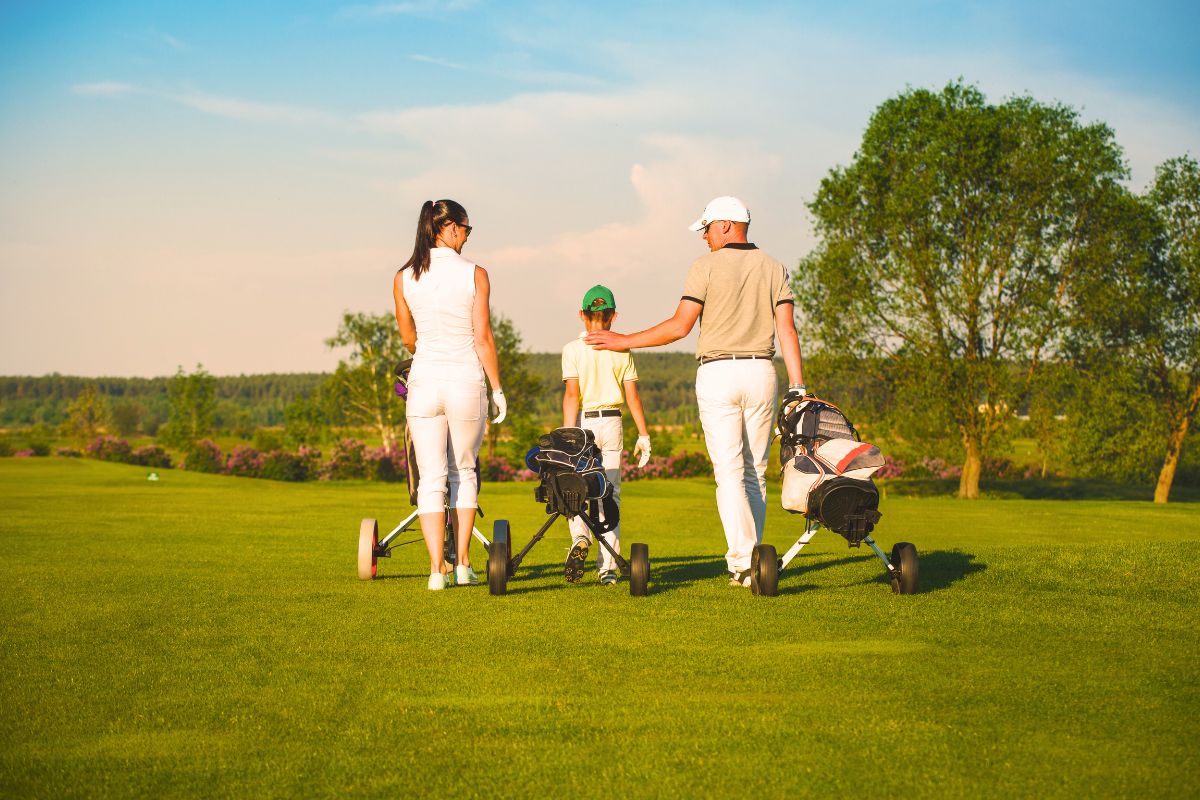
Golf gets written off as one of those hobbies that quietly empties a wallet while everyone smiles and pretends it is normal. Green fees, clubs, lessons, shoes, gloves, range balls, snacks, and then the extra bits nobody mentions until you are already paying for them. That reputation is real enough to scare a lot of parents away before they even consider whether the game might actually suit family life. But the full picture is more interesting than the stereotype. Golf does not have to begin with a country club membership or a garage full of gear. For many families, it can start with one bucket of balls, one hand me down junior club, and an hour where nobody is staring at a screen.
That matters because dads are often looking for activities that do three jobs at once. They want something affordable. They want something that gets the family out of the house. And they want something that does not feel like another logistical military operation. Golf can fit that brief if you approach it the right way. You do not need to commit to full rounds or chase a polished version of the sport. You can begin with a putting green, a driving range, or a short par three course where the goal is simply to laugh, move around, and learn together. If you want a practical sense of golf for beginners, it helps to look at beginner friendly resources that treat the game as something ordinary people can actually try, rather than a luxury identity project.
Quick Summary
- Family golf can be affordable if you start small and skip the prestige version of the sport.
- Driving ranges, municipal courses, used clubs, and off peak sessions cut costs fast.
- Golf works best for families when the goal is shared time, not perfect technique.
- Kids stay interested when sessions are short, playful, and built around little wins.
- A simple family golf budget prevents the hobby from quietly becoming expensive.
Why golf can work for family life without wrecking the budget
Plenty of family activities are cheaper on paper than they are in real life. A “quick” day out becomes parking, lunch, tickets, drinks, and the inevitable extra purchase that somebody suddenly needs. Golf can absolutely go the same way if you jump straight into the premium version. But it can also be surprisingly manageable because it is flexible. You can spend thirty dollars or three hundred dollars depending on where you play, what equipment you buy, and how seriously you treat it. That flexibility is what makes it useful for families trying to keep fun in the calendar without blowing up the monthly budget.
Golf also has a rare family advantage. It can scale across ages. A six year old can put. A teenager can work on a swing. A parent can hit a few irons or simply walk along and help collect balls during a practice game. Not every activity does that well. Team sports often split family members by age or skill. Theme parks can be fun but expensive and exhausting. Indoor entertainment can be easy but passive. Golf sits somewhere in the middle. It gets everyone outside, gives each person something to do, and creates natural pauses for conversation.
That slower pace is part of the value. Family life can feel like one long sequence of rushing from one task to another. A golf session breaks that rhythm. You wait your turn. You watch someone else try. You laugh when a shot dribbles two feet. You notice small progress. That makes it feel less like another obligation and more like time that actually belongs to the family. If you already think carefully about where your leisure money goes, the same logic behind a family budget without stress applies here too. The point is not to deny yourself activities. It is to choose versions of them that fit real life.
Start with the cheapest version of golf, not the most glamorous one
The fastest way to make golf feel unaffordable is to copy people who are already deep into it. Full sets of clubs, branded apparel, expensive lessons, and weekend rounds at destination courses make the sport look more complicated than it needs to be. Families are better off doing the opposite. Begin with the lowest commitment version possible and only spend more if the habit actually sticks. That one decision removes a huge amount of waste.
A driving range is usually the best starting point. You pay for balls, not a full round. Sessions can be short. There is no pressure to keep pace with other golfers. Kids can stop when they lose focus. Parents can take turns helping each child rather than worrying about course etiquette. A range also gives you a clear ceiling on cost before you arrive, which is useful if you are trying to keep family entertainment spending predictable.
Putting greens are even cheaper and often free. For younger kids, putting can be the smarter introduction because it feels more like a game and less like a technical lesson. Children do not need to understand club selection or swing mechanics to enjoy trying to roll a ball into a hole. They can compete in mini challenges, invent targets, and build confidence before moving to bigger shots. Parents often underestimate how much mileage they can get from a simple hour on a practice green.
Low cost starting points worth trying first
- Driving ranges during off peak hours
Midweek or late afternoon sessions are often cheaper than prime weekend slots, and they are usually less crowded. - Public putting greens
These are ideal for younger children because the game is simple, social, and easy to reset after a bad shot. - Par three or short courses
Shorter holes mean less walking, fewer lost balls, and a more realistic chance of keeping children engaged. - Family clinics or beginner group sessions
Some facilities run casual lessons where parents and kids can learn together without paying for private coaching.
Buy less equipment than you think you need
One of the easiest mistakes new golf families make is assuming each person needs a full setup from day one. They do not. A child who has never swung a club does not need a complete junior bag. A parent who is only trying the game twice a month does not need a premium set. In the early stage, golf equipment should be treated like any other uncertain family purchase. Keep it light until the habit proves itself.
Used clubs are the obvious place to start. Local sports resale stores, community marketplaces, golf classifieds, and hand me down sets from relatives can cut the cost dramatically. Kids outgrow clubs, lose interest, or change height quickly, so buying brand new junior gear often makes very little sense. Even adults can get a perfectly decent beginner setup without paying retail prices. Most beginners will not notice the difference between a brand new club and a used one that is in good condition.
You also do not need every club in the bag. A child can have fun with one wedge, one putter, and maybe a short iron. For a family range session, that is often enough. Parents can share clubs while figuring out what feels comfortable. Many courses and ranges rent equipment too, which can be a smart bridge before buying anything at all. If your household is already trying to trim spending in small ways, the same mindset behind cutting everyday expenses works here. Borrow, rent, buy used, and delay upgrades until they are earned by actual use.
Build family golf around short sessions, not all day outings
Adults often imagine golf in its traditional format, a full round that eats most of the day. That model is exactly why some families assume it will never work. Young kids get tired. Teenagers get bored. Parents get hungry and start calculating the cost of snacks, drinks, and post round meals. But family golf does not need to look like a serious golfer’s Saturday. In fact, it usually should not.
A better model is the ninety minute session. That could mean forty five minutes at the range followed by a quick putting challenge. It could mean six holes at a short course and then home before anyone melts down. It could mean one parent taking one child this week, then switching the next time so everyone gets more focused attention. Shorter sessions keep energy high and lower the chance that you pay for a long outing nobody enjoys by the end.
This also makes the hobby easier to repeat. A family activity does not need to be huge to be meaningful. Repetition matters more than spectacle. If a low cost range session happens twice a month, the family starts building a shared rhythm around it. Children begin to remember the little rituals, the favorite club, the silly putting competition, the snack on the way home. Those details are what turn an activity into a family tradition.
Use golf as a teaching tool, not just an outing
One reason golf can justify a place in the family budget is that it offers more than simple entertainment. It teaches patience in a way that kids can feel. A rushed swing usually goes badly. A tantrum does not help the next shot. Improvement comes in tiny pieces. That is useful for children, but it is also useful for adults who want a calmer way to spend time with them. The game gives you a structure for talking about effort, frustration, honesty, and self control without sounding like you are delivering a lecture.
There is also a money lesson hiding in golf if you want to use it. You can show kids how to compare options, rent instead of buy, set a budget for range visits, or save up for a piece of equipment they genuinely want. Parents who are already trying to teach sensible money habits can fold those lessons into the hobby naturally. A child who understands that a used putter and a public course leave more room in the budget for other family priorities is learning something useful long before adulthood.
That does not mean every golf session needs to become a financial seminar. It just means the hobby can pull double duty. You get the family time, the fresh air, and the skill building, while also sneaking in lessons about trade offs, practice, and patience. Those are good returns from one fairly simple activity.
What actually makes golf expensive, and how families can avoid those traps
Golf gets pricey through accumulation of more than one single purchase. One premium club here, one nicer course there, a lesson package, some branded clothing, a golf app subscription, a few restaurant stops after playing, and suddenly the hobby has turned into a budget leak. That does not happen because golf is uniquely evil. It happens because leisure spending grows quietly when there is no plan around it.
The fix is simple. Treat golf like a category in the family budget rather than a stream of random purchases. Decide how much per month feels reasonable. Include balls, range sessions, occasional course fees, and equipment replacement. Then work within that number. A set amount keeps the activity fun because it removes the guilt and surprise from spending.
| Golf Cost Trap | Why It Adds Up | Budget Friendly Alternative |
|---|---|---|
| Buying full new sets for everyone | Kids may outgrow them quickly and adults may not stick with the hobby | Buy used, rent, or start with a few clubs each |
| Jumping straight to full length courses | Higher fees and longer sessions increase spending and fatigue | Use ranges, putting greens, and par three courses first |
| Branded golf clothing and accessories | The extras often cost more than the actual playing time | Wear comfortable existing sports clothes that meet course rules |
| Food and drinks at the venue every visit | Small purchases multiply over a month | Pack water and a simple snack from home |
| Too many lessons too soon | Private coaching can outpace actual interest or progress | Try group clinics or occasional beginner sessions |
Keep kids interested by making the game feel playful
If the first few family golf sessions feel like a strict adult lesson, children will tune out fast. Golf asks for repetition and focus, which can be hard sells for younger kids if there is no fun built into the format. Parents get better results when they stop thinking like instructors and start thinking like activity designers. The goal is not to produce a technically polished golfer by the end of the month. The goal is to create positive associations with the activity so kids want to come back.
That can be as simple as setting mini challenges. Who can get the ball closest to the marker cone. Who can make a putt from three different distances. Who can invent the funniest victory dance after a clean shot. You can track points if your kids like competition or skip points entirely if one child gets discouraged easily. Family golf works best when the format matches the personalities in front of you.
There is good reason to value this kind of active family time. The concept of physical fitness includes movement, coordination, endurance, and general wellbeing, which helps explain why light recreational activities can still have value for families. Golf is not the most intense sport in the world, and it does not need to be. Its strength for families is that it combines light movement, outdoor time, concentration, and conversation in one outing. That is a pretty good package for a budget conscious hobby.
Simple ways to make a family golf session more fun
- Bring one easy target game for the range, such as closest ball to a marker.
- Let each child choose one club they “own” for the day.
- Set a time limit before you start, so nobody feels trapped in a session that runs too long.
- Celebrate effort and improvement, not just good shots.
- End while everyone still has a little energy left rather than squeezing every last minute out of the booking.
How dads can keep the hobby fair when one child is more interested than another
Family activities get tricky when enthusiasm is uneven. One child may love golf immediately. Another may tolerate it only because there is a snack at the end. That does not mean the hobby has failed. It just means you need a format that respects different levels of interest. Forcing identical participation from every child usually backfires, especially with a sport that asks for patience.
One option is to rotate the setup. Some golf sessions are full family outings. Others are one on one time with the child who wants more practice. That can actually make the hobby more affordable because you are not paying for everyone every single time. It also gives each child a chance to shape the activity around their own pace. A more interested child might want a lesson or a short course. A less interested child might prefer putting and then heading home.
Parents can also pair golf with another low cost activity nearby. A range session followed by a walk, a playground stop, or a packed picnic makes the outing feel broader than just “Dad’s golf idea.” That matters if you want the activity to feel shared rather than imposed. The more flexible you are, the more likely the hobby becomes something the family can actually keep.
What a realistic family golf budget can look like
There is no universal number because golf costs vary by location, but a simple budget framework helps. Think in terms of monthly rhythm rather than one off treats. If the family wants to golf twice a month, price those two sessions first. Then add a small equipment sinking fund for balls, a replacement glove, or the occasional used club. If a lesson is part of the plan, decide whether it is quarterly rather than monthly. That one shift can keep the activity affordable without making it feel restricted.
A sample low pressure setup might look like this: two range visits per month, one bucket each for a parent and child to share, one occasional putting green stop, and a small annual budget for secondhand junior gear. That is a very different financial picture from paying for multiple full rounds, new equipment, and regular coaching. The activity stays in family life, but the premium layer gets stripped away.
The biggest advantage of budgeting it this way is peace of mind. Parents do not need another hobby that creates low grade financial stress in the background. If the money is planned for, golf stays what it should be, a family activity, not a source of tension.
Making golf part of family life without making it the whole plan
Golf does not need to become your family identity to be worth doing. In fact, it is probably better when it does not. The sweet spot for most households is using golf as one tool in the wider mix of affordable family time. Some weekends it might be a range session. Other weekends it might be a bike ride, a cheap museum day, a movie night at home, or a picnic in the park. That keeps the activity fresh and protects the budget from hobby creep.
What golf can offer, though, is a very specific kind of time together. It is structured without being frantic. It is active without being brutal. It gives parents and kids something to work on side by side without turning every interaction into a lesson. And because progress in golf is so incremental, it naturally rewards patience and encouragement. Those are pretty good things to build into family life, especially if you can do it without spending like you joined a private club.
If you are a dad trying to find one more activity that feels fun, useful, and financially sane, golf deserves a second look. Not the glossy version. Not the status version. The ordinary family version. The one with secondhand clubs, short sessions, packed water bottles, and children who are mostly excited about trying to hit one clean shot before the day is done. That version is a lot more accessible than people think, and for the right family, it can be one of the better ways to spend a bit of time and a manageable amount of money together.
A better scorecard for family time
The real win with family golf is not a lower handicap or a prettier swing. It is having an activity that gives everyone a reason to head outside, slow down, and share a few small moments that would not happen in the middle of ordinary routines. That is the kind of value that matters to parents trying to stretch both time and money. If you keep the setup simple, resist the expensive version of the hobby, and treat fun as the priority, golf can become one of those rare family activities that feels practical and memorable at the same time.
